
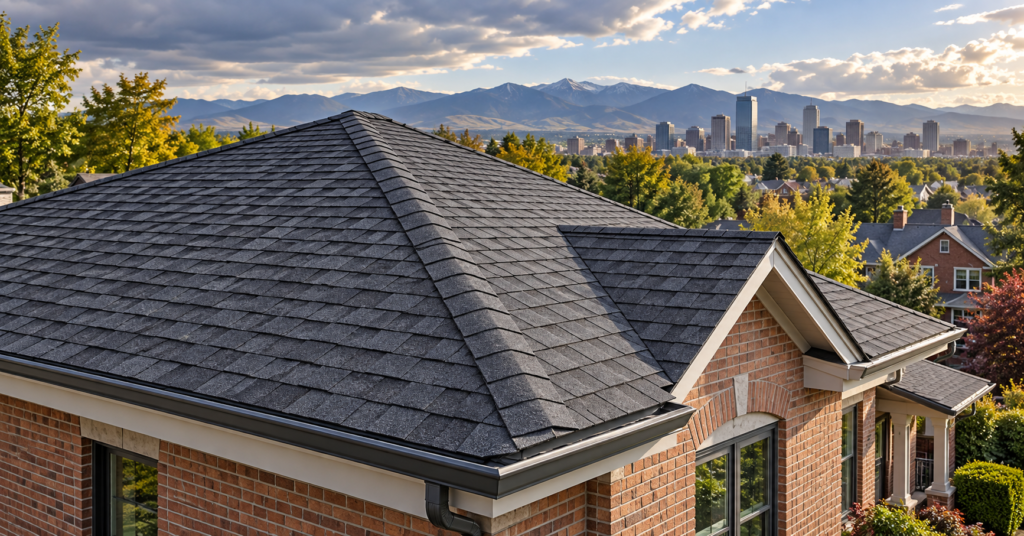
Denver impact-resistant shingles deserve a careful cost comparison before you approve a roof replacement. The additional price should be connected to a specific shingle, documented hail performance and a clearly defined installation scope. A quote that simply promises a “Class 4 roof” leaves too much unanswered.
Hail protection is a practical concern locally. The National Weather Service has documented significant roof damage from storms affecting Denver and nearby communities. However, choosing a stronger shingle starts with understanding what the upgrade includes and how its performance has been evaluated.
Separate the Shingle Upgrade From the Full Roofing Price
A complete roof replacement includes much more than the shingles. Removing existing roofing, preparing the roof deck, installing underlayment and flashing, handling disposal and completing required inspections all contribute to the bill.
For local context, HRI Roofing & Construction’s published 2026 cost guide gives a general Denver asphalt-shingle replacement range of approximately $8,000–$18,000 or more. This is one contractor’s planning estimate, not an independently established citywide average or a price specifically for impact-resistant shingles.
The useful number for this decision is the additional installed cost of upgrading an otherwise comparable roofing project.
Ask the same contractor for a standard-shingle option and an impact-resistant option using the same measurements, preparation work, flashing scope and warranty terms. Any differences beyond the shingles should be identified separately.
An Illustrative Upgrade Comparison
The following figures demonstrate the calculation. They are not Denver market rates or an HRI quote.
| Budget item | Standard shingles | Impact-resistant shingles |
|---|---|---|
| Complete quoted roofing project | $12,000 | $14,000 |
| Additional cost of choosing the upgrade | — | $2,000 |
Here, the upgrade costs $2,000, approximately 16.7% above the standard option. That comparison is meaningful only if both proposals cover equivalent work.
A higher quote may also include new flashing, additional ventilation work or a stronger workmanship warranty. Those changes have value, but they should not be presented entirely as the price of better shingles.
Compare Denver Impact-Resistant Shingles by Exact Product
“Architectural” and “impact-resistant” describe different characteristics. Do not assume an architectural shingle has a particular impact rating unless the exact product documentation confirms it.
The estimate should identify the manufacturer, product line, color and applicable impact-test classification. This allows you to check the proposed material before ordering and compare it with any insurer eligibility requirements.
According to the Insurance Institute for Business & Home Safety’s roofing guidance, UL 2218 uses steel-ball impacts to classify roofing products from Class 1 through Class 4. Class 4 is the highest classification within that test.
A Class 4 result is useful evidence, but it is not a promise that the roof will escape damage in every hailstorm.
IBHS also evaluates shingles using laboratory-made hailstones and assesses damage such as tearing, deformation and granule loss. Its 2025 impact-resistant shingle assessment found differences in performance among the products tested.
Use the exact product’s available test results to assess the upgrade. A general description such as “premium storm shingles” is not enough to explain why one option costs more.
Check Which Roof Areas the Upgrade Covers
A proposal may cover the main house while excluding a detached garage, porch or another roof section. Confirm the surfaces included in the price and whether the same shingle will be used across them.
Ridge caps and other accessories should also be specified. Ask how these components fit the proposed roofing system and whether the completed installation meets any documentation requirements attached to an insurance discount.
Low-slope sections need separate attention. A shingle selected for the main pitched roof may not be appropriate for every roof surface. The contractor should identify any section requiring a different roofing system and price that work clearly.
This prevents a seemingly complete upgrade from leaving important areas outside the agreed scope.
Keep Preparation Costs Separate From Material Choices
An impact-resistant shingle does not remove the need to address problems beneath the existing roofing.
Decking deterioration, unsuitable fastening surfaces and damaged flashing can change the project price after tear-off. Before signing, ask how concealed conditions will be documented and how additional work will be authorized.
For decking, request the pricing method, material specification and any quantity already included in the estimate. A stated allowance is more useful when the contract also explains the cost of exceeding it.
Roof height, steepness, access restrictions and multiple existing roofing layers can affect labor and removal costs. These are property-specific expenses that should remain visible when comparing material options.
TCR’s guide to hidden assumptions in remodeling estimates explains why clearly stated inclusions and exclusions matter before construction begins.
Verify Insurance Savings Before Counting Them
Treat a possible insurance discount as something to confirm with your insurer before ordering materials.
Provide the exact shingle name and ask whether it qualifies under your policy. Request the annual dollar saving, required installation records, effective date and any conditions affecting continued eligibility.
Also ask whether the discount applies to the entire premium or only a particular part of it. A percentage alone may give an incomplete picture of the actual saving.
For illustration, a $2,000 upgrade paired with a confirmed $200 annual saving would take ten years to recover through that saving alone. This simple calculation assumes the saving continues unchanged and excludes financing costs, future repairs and the time value of money.
The upgrade may still be worthwhile for its performance characteristics. The important point is to keep confirmed savings separate from hoped-for savings.
For a storm-related claim, ask the insurer which replacement materials are included in the approved scope and what portion of an optional upgrade you would pay yourself. A contractor’s proposal does not establish insurance coverage.
Plan Denver Permits and Delivery Before Tear-Off
Denver’s Quick Permits guidance identifies roofing permit requirements and states that roofing work on individual landmarks or buildings within historic districts needs prior Landmark Preservation approval.
Confirm who will obtain the applicable permit, pay the fees, arrange inspections and address corrections. Properties outside Denver city limits may fall under another jurisdiction even when their mailing address refers to Denver.
Resolve any applicable HOA material or color approval before ordering. Confirm availability of the selected shingles and accessories, and establish a written process for approving substitutions.
The schedule should also identify delivery access, debris-container placement, protection for the property and temporary weather protection if work is interrupted. These preparations help prevent avoidable delays once the old roofing is removed.
Read the Warranty Alongside the Impact Rating
An impact classification and a warranty answer different questions. The rating describes performance under a defined test; the warranty states what the provider agrees to cover.
Review the actual documents for material defects, installation workmanship, labor, tear-off and disposal costs, exclusions, registration requirements and transfer conditions.
Ask specifically how hail damage is treated. Do not infer hail coverage from the presence of a Class 4 label.
If an enhanced warranty is included, have the contractor identify any installation, accessory or registration requirements needed to obtain it. Keep the final invoice, product records, permit information and warranty confirmation together after completion.
How HRI Roofing & Construction Can Help Denver Homeowners
HRI Roofing & Construction is a locally owned roofing company serving Denver and surrounding communities. Its published customer testimonials highlight clear communication, punctuality, professional workmanship and thorough cleanup, showing why those Denver-area customers trust HRI with their roofing projects.
The company lists impact-resistant shingles among its residential roofing options and offers inspections, material guidance, repairs and complete roof installations. Homeowners considering an upgrade can ask HRI to assess the existing roof, explain suitable options and provide a written comparison of standard and impact-resistant shingles.
HRI’s services include residential roof repair and replacement, hail and wind damage restoration, gutters, exterior painting, commercial roofing and HOA services. It also offers insurance-claim assistance, including damage documentation and coordination with adjusters.
That combination can help homeowners organize a project involving roofing and other storm-damaged exterior components. Ask for the work on each component to be described and priced clearly, along with any optional shingle upgrade.
HRI advertises free inspections, providing a starting point for discussing the roof’s condition and preparing a property-specific estimate. Insurance coverage and claim payments remain decisions for the insurer under the applicable policy.
Remodeling Note: Roofing prices, product availability, permit requirements, warranties and insurance terms vary by property and project. The price comparison and savings calculation above are illustrative, while the broader Denver cost range is attributed to one contractor’s published guide. Confirm current requirements and obtain a detailed written estimate before authorizing work. Impact-resistant roofing reduces certain risks but is not hail-proof.