Deciding whether to repair or replace your roof depends on its age, material, overall condition, extent of damage, and whether previous repairs have solved the underlying problem. A small area of damage on an otherwise reliable roof may only need repair. Widespread deterioration, repeated leaks, damaged roof decking, or a roof nearing the end of its expected service life may make replacement more practical.
Roofing problems should not be judged from appearance alone. Water can enter through damaged shingles, failed flashing, deteriorated sealants, roof penetrations, valleys, or transitions between different parts of the building. The visible stain inside the house may be some distance from the actual entry point.
A qualified roof inspection can help determine whether the problem is isolated or part of a broader system failure. Addressing warning signs early may prevent damage to insulation, ceilings, walls, framing, electrical components, and interior finishes.
Roof Repair vs. Roof Replacement at a Glance
The following comparison provides a general starting point.
| Roof condition | Repair may be suitable | Replacement may be more appropriate |
|---|---|---|
| Isolated missing shingles | Yes, when surrounding materials remain sound | When missing or loose shingles appear throughout the roof |
| Limited flashing problem | Yes, when the problem is confined to one detail | When flashing failures occur at multiple locations |
| Single recent leak | Possibly, after the source is identified | When leaks are recurring or appear in several areas |
| Minor storm damage | Yes, when damage is localized | When a substantial portion of the roof is affected |
| Roof near the end of its service life | Repair may provide short-term protection | Replacement may offer better long-term value |
| Widespread curling or cracking | Usually not practical to repair individually | Replacement is commonly considered |
| Damaged roof decking | Local repair may work for a small area | Widespread deterioration may require replacement |
| Repeated previous repairs | Another repair may be temporary | Replacement may address broader deterioration |
| Poor installation across the roof | Isolated correction may not solve it | Partial or complete replacement may be necessary |
These are general considerations. Roof material, slope, structure, climate, installation details, and local requirements can change the appropriate response.
How Long Does a Roof Last?
There is no single lifespan for every roof. Longevity depends on the material, product quality, installation, climate, roof slope, ventilation, maintenance, exposure, and surrounding conditions.
Approximate service-life expectations often vary as follows:
| Roofing material | Broad potential service life |
|---|---|
| Basic asphalt shingles | Approximately 15–25 years |
| Higher-quality architectural shingles | Approximately 20–35 years |
| Wood shingles or shakes | Approximately 20–40 years |
| Metal roofing | Approximately 40–70 years |
| Clay or concrete tile | Approximately 40–75 years or more |
| Slate roofing | Approximately 50–100 years or more |
| Low-slope membrane roofing | Approximately 15–30 years |
These ranges are not guarantees. A poorly installed premium roof may fail earlier than a modest roof that was correctly installed and maintained.
Roof age should be considered alongside its actual condition. Do not replace a functioning roof solely because it has reached a particular birthday, and do not assume a younger roof is reliable when it shows evidence of serious installation or moisture problems.
Warning Signs That Your Roof May Need Attention
Some roofing problems are visible from the ground, while others appear inside the attic or living areas.
Homeowners should watch for:
- Missing, loose, cracked, or curling shingles
- Shingle granules accumulating in gutters
- Discoloration or uneven roof surfaces
- Damaged flashing
- Deterioration around vents, chimneys, and skylights
- Rust or loose fasteners on metal components
- Sagging areas
- Daylight visible through the roof structure
- Water stains on ceilings or walls
- Damp insulation
- Musty attic odors
- Mold or deterioration on roof sheathing
- Recurring ice dams
- Debris collecting in valleys
- Increased leaks during wind-driven rain
- Repeated repairs in the same area
Do not climb onto a roof to investigate these conditions yourself. Roof surfaces may be steep, slippery, fragile, or structurally compromised. Many initial observations can be made safely from the ground or through a professional inspection.
Missing or Damaged Shingles
A few shingles can be damaged by high winds, falling branches, foot traffic, improper fastening, or age.
Repair may be reasonable when:
- Damage is limited to a small area
- The roof is otherwise in good condition
- Matching or compatible materials are available
- The roof decking beneath the damage remains sound
- There are no signs of widespread installation failure
- The surrounding shingles still seal and perform properly
Replacement may be more appropriate when shingles are cracked, curling, loose, or missing across several roof sections.
A patch may look different when the original material has faded or is no longer manufactured. The color difference is generally cosmetic, but material compatibility and installation quality affect performance.
Curling, Cracking or Buckling Shingles
Shingles that curl upward, crack, buckle, or no longer lie flat may indicate aging, heat exposure, moisture problems, improper installation, or deterioration of the roofing material.
A small number of damaged shingles might be replaceable. Widespread deformation generally suggests that the roof covering is no longer performing consistently.
Buckling can also be related to problems beneath the shingles, including roof-deck movement, underlayment issues, trapped moisture, or poor installation. Replacing the visible shingle without understanding the cause may not provide a lasting solution.
Excessive Granules in the Gutters
Asphalt shingles have a protective granular surface. Some loose granules can appear after installation or gradually during ordinary aging.
A large or increasing amount of granule loss may indicate that the shingles are deteriorating. Roof areas may begin to look patchy, dark, or unusually smooth as the underlying material becomes exposed.
Granule accumulation alone does not determine whether the entire roof needs replacement. The roof’s age, remaining shingle condition, leak history, and extent of surface loss should also be evaluated.
Clean gutters and downspouts allow roof water to move away from the house. Overflowing gutters can affect roof edges, fascia, siding, foundations, and landscaping.
Water Stains on Ceilings or Walls
A brown or yellow ceiling stain is an obvious warning sign, but it does not always identify the leak’s location.
Water can travel along:
- Roof decking
- Rafters or trusses
- Pipes
- Electrical wiring
- Insulation
- Framing
- Ceiling surfaces
The source may be a roof leak, plumbing problem, condensation issue, or exterior wall leak. An inspection should distinguish among these possibilities.
A small stain does not necessarily mean the damage is minor. Water may have entered the building assembly for some time before becoming visible inside the room.
Active Dripping During Rain
Water dripping from the ceiling, attic, or around a roof penetration requires prompt attention.
If active water entry occurs:
- Keep people away from wet ceilings or bulging drywall
- Protect belongings when this can be done safely
- Avoid contact with wet electrical fixtures or wiring
- Do not climb onto the roof during a storm
- Arrange an appropriate professional evaluation
- Document visible damage
- Contact the insurer when the loss may be covered
A container may limit damage from a small drip, but it does not correct the source. Wet ceiling materials can weaken, and concealed moisture may affect insulation or framing.
Emergency temporary protection should be installed only when weather and site conditions allow qualified workers to do so safely.
Damaged or Failed Flashing
Flashing directs water away from roof intersections and penetrations. It is commonly installed around:
- Chimneys
- Skylights
- Vent pipes
- Roof valleys
- Dormers
- Walls meeting roof surfaces
- Roof edges
- Changes in roof slope
Loose, corroded, missing, poorly integrated, or improperly sealed flashing can allow water into the roof assembly.
A localized flashing repair may solve the problem when the surrounding roof remains sound. However, repeated flashing failures across an aging or poorly installed roof may support replacement.
Sealant should not automatically be treated as a permanent substitute for correctly designed flashing.
Problems Around Chimneys, Skylights and Roof Vents
Roof penetrations create transitions that must remain weather-resistant as materials move, age, and experience changing temperatures.
Warning signs include:
- Cracked or missing sealant
- Loose flashing
- Corroded metal
- Water stains below the penetration
- Deteriorated chimney masonry
- Damaged vent boots
- Condensation around skylights
- Soft or stained roof decking
- Gaps around fasteners
Not every leak near a skylight means the skylight itself has failed. The cause may involve flashing, condensation, roofing material, drainage, or installation.
Similarly, chimney-related leaks may originate from roofing details, masonry, caps, flashing, or condensation. The complete assembly should be evaluated.
Sagging Roof Areas
A roofline that appears to sag, dip, or wave deserves prompt professional evaluation.
Possible causes include:
- Damaged roof decking
- Deteriorated rafters or trusses
- Long-term water exposure
- Excessive structural loads
- Inadequate framing
- Foundation or wall movement
- Installation problems
- Multiple layers of roofing
- Localized impact damage
Sagging is not merely a cosmetic roofing problem. It may indicate an issue with the underlying structure.
Do not enter an attic or room when there are signs of imminent structural failure, falling materials, or heavily saturated ceilings. Keep people away and seek appropriate assistance.
Mold, Rot or Damp Roof Decking
Visible staining, mold-like growth, soft sheathing, rusted fasteners, or damp insulation in the attic can indicate water entry or condensation.
The cause may involve:
- Exterior roof leakage
- Air leaking from the living area
- Bathroom or kitchen fans exhausting into the attic
- Inadequate ventilation
- Missing or poorly installed insulation
- Mechanical equipment
- Ice dams
- High indoor humidity
- Plumbing leaks
Replacing roofing materials will not correct every attic-moisture problem. The source of the moisture must be identified.
The U.S. Department of Energy’s home retrofit guidance notes that ventilation fans should discharge outside rather than directly into the attic.
Damaged sheathing or structural materials may need to be replaced during roofing work. Because deterioration can remain concealed until the roof covering is removed, the project budget should include an allowance for possible repairs.
Daylight Visible Through the Attic
Daylight visible through the roof structure may indicate an opening, displaced material, damaged sheathing, or an intentional but misunderstood vent.
Do not assume every visible light source is a leak. Some roof and attic ventilation components are designed to allow airflow while preventing water entry.
However, unexplained gaps—especially those accompanied by water stains, wet insulation, or debris—should be evaluated. Insects, pests, wind-driven rain, and snow can enter through damaged openings.
Enter attics only when there is a safe walking surface, adequate lighting, and no indication of structural or electrical hazards.
Repeated Roof Leaks
One well-diagnosed leak on an otherwise sound roof may justify repair. Several leaks occurring over time can indicate widespread aging, installation defects, failing materials, or connected moisture problems.
Consider the repair history:
- How many repairs have been completed?
- Were they in the same area or different locations?
- Did each repair identify the actual cause?
- How long did the repair remain effective?
- Is the roof still under warranty?
- Are replacement materials still available?
- Is the roof approaching the end of its expected service life?
- Have the repairs begun to approach the cost of replacement?
Repeatedly treating symptoms can become more expensive than addressing a roof that is failing as a complete system.
Storm, Wind and Hail Damage
Severe weather can damage roofing even when the roof previously appeared reliable.
Potential storm damage includes:
- Missing or lifted shingles
- Impact marks
- Cracked tile
- Dented metal
- Punctured membranes
- Damaged flashing
- Fallen branches
- Loosened gutters
- Displaced ridge materials
- Water entry caused by wind-driven rain
Damage can be difficult to identify from the ground. After a severe event, document visible conditions and follow appropriate insurance-notification procedures.
Do not sign a roofing contract under immediate pressure from an unsolicited visitor. Verify credentials, insurance, scope, warranties, and payment terms before authorizing work.
Damage From Trees and Debris
Branches that rub against a roof can wear roofing surfaces. Falling limbs may crack shingles, break tile, puncture membranes, bend metal, or damage the underlying structure.
Leaves and debris can collect in valleys, behind chimneys, and in gutters, slowing drainage and holding moisture.
Tree trimming near a house may require specialized knowledge and equipment. Large branches, utility lines, steep slopes, and unstable trees can create serious hazards.
The roof should be inspected after a significant impact, even when the visible exterior damage appears limited.
Moss, Algae and Plant Growth
Dark streaks, moss, lichen, or other growth can change the roof’s appearance. In some cases, growth may retain moisture, lift roofing edges, or conceal deterioration.
Do not use aggressive pressure washing or harsh chemicals without confirming that the method is appropriate for the roofing material. Improper cleaning can damage shingles, coatings, flashing, and surrounding surfaces.
The presence of moss alone does not automatically mean the roof needs replacement. The material’s condition underneath the growth is more important.
Recurring growth may be influenced by shade, moisture retention, debris, drainage, roof orientation, and surrounding vegetation.
Ice Dams and Winter Leaks
Ice dams can form when snow melts on warmer portions of the roof and refreezes near colder edges. Water may then back up beneath roofing materials and enter the structure.
Contributing factors may include:
- Heat escaping from the home
- Air leakage into the attic
- Uneven roof temperatures
- Insulation deficiencies
- Ventilation conditions
- Complicated roof geometry
- Snow accumulation
- Weather patterns
Replacing shingles without correcting the underlying heat and moisture conditions may not prevent recurrence.
Roof-edge heating products and snow removal require careful design and safe use. Avoid climbing onto an icy roof or striking roofing materials with tools.
When Roof Repair Is Usually Worth Considering
Repair may be appropriate when the damage is limited and the remaining roof is expected to perform reliably.
Common repair situations include:
- A few missing shingles
- A localized flashing defect
- One damaged vent boot
- Limited wind damage
- A puncture confined to a small area
- An isolated leak with an identifiable source
- Minor damage around one roof penetration
- A small section of deteriorated decking
- Damage to an otherwise relatively new roof
A repair should address the cause rather than cover the visible symptom. Ask whether the proposed work includes surrounding materials, underlayment, flashing, sheathing, and interior moisture where applicable.
When Roof Replacement May Be More Practical
Replacement may be more appropriate when deterioration affects the roof broadly or reliable repairs are no longer practical.
Conditions that may support replacement include:
- The roof is near or beyond its expected service life
- Shingles are curling or cracking across several areas
- Granule loss is widespread
- Leaks appear in multiple locations
- Repairs repeatedly fail
- Decking damage extends across large sections
- Materials are no longer available or compatible
- The roof was installed incorrectly
- Several roofing layers create problems
- A substantial portion was damaged by a storm
- Structural or ventilation work requires broad access
- Replacement offers better long-term value than continued repairs
The decision should account for the complete roof assembly, not merely the visible outer covering.
Can Only Part of a Roof Be Replaced?
Partial replacement may be possible when damage is confined to a distinct roof section and the remaining areas are in good condition.
However, partial replacement can create challenges involving:
- Material matching
- Color differences
- Warranty coverage
- Flashing transitions
- Underlayment continuity
- Different remaining service lives
- Labor efficiency
- Future replacement costs
A clearly separated garage, addition, porch, or roof plane may be easier to replace independently than a small patch in the middle of a continuous roof.
Compare the cost, expected lifespan, and warranty of partial replacement with complete replacement before deciding.
What Happens During a Roof Replacement?
A typical roof-replacement process may include:
- Protecting the property
- Delivering materials
- Removing existing roofing where required
- Inspecting the roof decking
- Replacing damaged sheathing
- Evaluating flashing and penetrations
- Installing underlayment
- Installing ice or water protection where required
- Installing new roof covering
- Completing ridge, edge, valley, and penetration details
- Reinstalling or replacing flashing
- Improving ventilation where appropriate
- Cleaning gutters and the work area
- Collecting loose fasteners
- Completing inspections
- Reviewing warranty and maintenance documents
The exact sequence depends on the roof material, building design, climate, local requirements, and whether existing roofing is removed.
Ask how the contractor will protect siding, windows, landscaping, driveways, attic contents, air-conditioning equipment, and neighboring property.
Should You Install New Roofing Over the Existing Roof?
Installing new roofing over an existing layer may be permitted in some locations and prohibited or unsuitable in others.
Potential limitations include:
- Concealed damaged decking
- Added weight
- Reduced ability to inspect the assembly
- Uneven finished appearance
- Shorter material performance
- Manufacturer warranty restrictions
- Flashing complications
- Existing leaks
- Multiple previous layers
- Local code limits
Removing the existing roof provides an opportunity to inspect the decking and correct concealed problems. However, removal also adds labor, disposal, weather exposure, and cost.
The appropriate approach should be determined from the roof’s condition, material, structure, local requirements, and product instructions.
Coordinate Roofing With Other Exterior Remodeling
Roofing affects siding, gutters, flashing, chimneys, skylights, insulation, solar equipment, additions, and exterior trim.
If several exterior projects are planned, determine the proper sequence before construction begins.
Roof replacement may need to be coordinated with:
- New siding
- Window replacement
- Gutter installation
- Chimney repair
- Skylight replacement
- Attic insulation
- Solar-panel removal or installation
- Porch additions
- Second-story additions
- Exterior painting
- Drainage improvements
Completing siding or interior repairs before stopping an active roof leak can expose finished work to additional damage.
Our guide on how to plan an exterior home remodel explains how roofing, siding, windows, doors, drainage, and other exterior components work together.
Roof Replacement and Siding
Roofing and siding meet at several important transitions. Flashing must direct water over the appropriate weather-resistant layers.
If both systems are being replaced, determine:
- Which project should happen first
- How wall-to-roof flashing will be installed
- Whether siding must be removed temporarily
- How roof edges and trim will meet
- Whether sheathing damage is present
- How gutters will be coordinated
- Who is responsible for each transition
You can also review our article explaining when to replace your home’s siding for warning signs affecting exterior walls.
Does Roof Replacement Require a Permit?
Roofing permit requirements vary by jurisdiction, material, structural scope, building type, and number of existing layers.
Approval may be required for:
- Complete roof replacement
- Structural repairs
- Decking replacement
- Changes in roofing material
- Added roof weight
- New skylights
- Modified rooflines
- Ventilation changes
- Work in regulated historic areas
- Solar equipment
- Changes to fire- or wind-resistance details
Confirm requirements with the local building department. A homeowners association may also have separate approval rules, but association approval does not replace a government permit.
Our guide on whether you need a permit for a home remodel provides additional information about permits and inspections.
How to Compare Roof Repair and Replacement Estimates
A written estimate should describe more than the total price.
Ask each contractor to identify:
- Areas being repaired or replaced
- Roofing product and manufacturer
- Underlayment
- Flashing work
- Roof-deck repair allowances
- Ventilation work
- Ice or water protection
- Fastening method
- Removal of existing materials
- Disposal and cleanup
- Gutter protection
- Permit responsibility
- Material and labor warranties
- Estimated schedule
- Payment terms
- Exclusions
- Procedures for unexpected damage
Estimates cannot be compared accurately when contractors are pricing different materials or scopes.
A low repair estimate may exclude damaged decking or flashing. A replacement estimate may rely on an unrealistically small allowance for concealed repairs. Ask what will happen if deterioration is discovered after removal begins.
Choose a Qualified Roofing Contractor
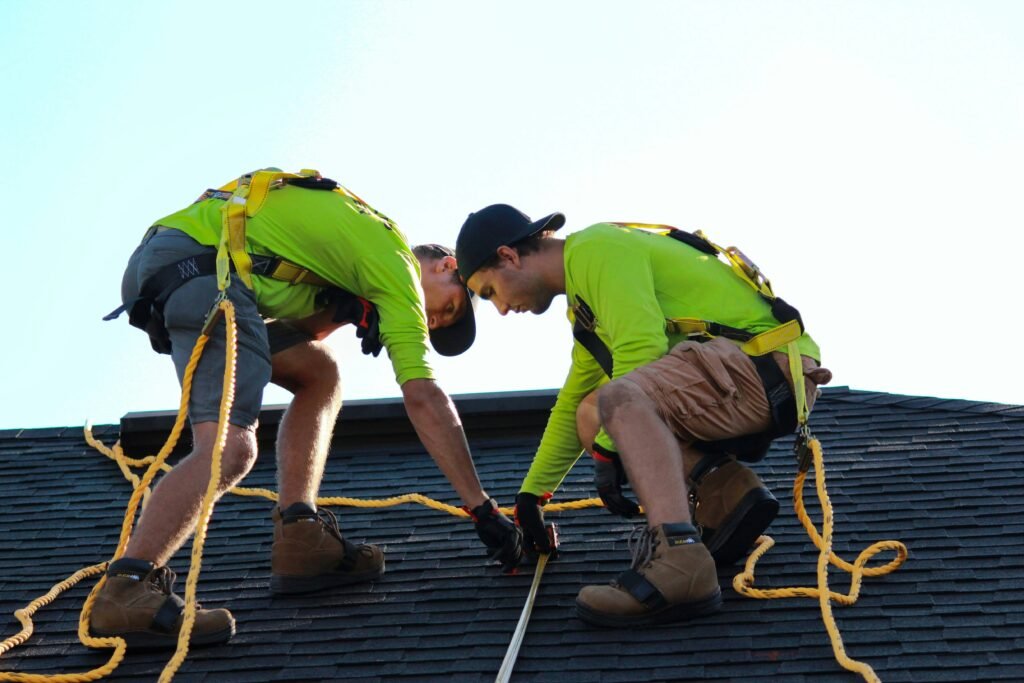
Roof work involves fall hazards, weather protection, structural conditions, and detailed installation requirements. Contractor licensing and registration rules vary by state and municipality.
Before hiring, consider:
- Relevant roofing experience
- Required licenses or registrations
- General liability and workers’ compensation coverage
- Experience with the selected roof material
- Manufacturer qualifications where applicable
- Local permit knowledge
- Comparable references
- Written warranty terms
- Detailed proposals
- Cleanup and property-protection procedures
- Who will supervise the work
- How change orders will be approved
Avoid making full payment before work begins. Connect the payment schedule to clearly defined project stages and applicable local requirements.
Our guide on how to choose a remodeling contractor provides a complete list of questions to ask before hiring.
Common Roof Repair and Replacement Mistakes
Waiting Until the Roof Leaks Heavily
By the time water reaches an interior room, hidden materials may already be wet. Early inspection can help identify deterioration before extensive interior damage occurs.
Repairing the Stain Instead of the Source
Painting a ceiling or replacing drywall does not stop water entry. The roof, flashing, plumbing, condensation, and exterior walls may all need evaluation.
Assuming Every Leak Requires Replacement
A relatively new roof with one failed flashing detail may only need a targeted repair.
Continuing Repairs on a Widely Deteriorated Roof
Repeated repairs across an aging roof can become expensive without providing long-term reliability.
Choosing Based Only on Price
Roof performance depends heavily on preparation, flashing, ventilation, fastening, transitions, and workmanship—not only the visible material.
Ignoring the Attic
The attic may reveal wet insulation, staining, ventilation problems, air leakage, and damaged decking that are not visible from outside.
Mixing Incompatible Materials
New products must be compatible with the existing roof, flashing, sealants, underlayment, and surrounding components.
Failing to Plan for Hidden Damage
Decking or framing deterioration may not be visible until roofing is removed. Include a contingency in the budget.
Frequently Asked Questions
Is it better to repair or replace a leaking roof?
A repair may be sufficient when the leak has one identifiable source and the remaining roof is in good condition. Replacement may be more practical when leaks recur, damage is widespread, materials are failing, or the roof is near the end of its expected service life.
How many roof leaks are too many?
There is no universal number. Multiple leaks in separate areas, repeated failed repairs, or widespread moisture damage may indicate a broader roof problem. The complete assembly should be inspected.
Can a roof be repaired without replacing the shingles?
It depends on the source. Some problems involve flashing, vents, sealants, gutters, or roof penetrations rather than the shingles themselves. Other repairs require shingles to be removed and replaced to access underlying materials.
Should you replace a roof before it starts leaking?
Replacement may be reasonable when an inspection finds widespread deterioration or failure is likely, even if interior leakage has not appeared. Age alone should not be the only factor.
Can you replace only one side of a roof?
It may be technically possible when one distinct roof plane is damaged and the others remain sound. Material matching, warranties, transitions, appearance, and different remaining lifespans should be considered.
Do curling shingles mean the roof needs replacement?
Widespread curling often indicates aging or material deterioration and may support replacement. A few affected shingles may be repairable if the cause is localized.
Why does a roof continue leaking after repair?
The original source may have been misidentified, more than one leak may exist, or water may be entering through flashing, penetrations, walls, condensation, or nearby roof areas.
Can you inspect your own roof?
Homeowners can observe some warning signs from the ground and check accessible interior areas when safe. Climbing onto a roof creates a serious fall risk and may damage roofing materials. A qualified professional should complete the close inspection.
Does homeowners insurance pay for a new roof?
Coverage depends on the policy, cause of damage, roof condition, exclusions, deductibles, and documentation. Sudden covered events may be treated differently from ordinary aging, deferred maintenance, or wear. Contact the insurer for guidance about a particular loss.
Should gutters be replaced with the roof?
Not always. Gutters in good condition may be retained, although they may need to be removed or protected during roofing work. Damaged, undersized, poorly sloped, or failing gutters can be coordinated with roof replacement.
Make the Decision Based on the Entire Roof System
The decision to repair or replace your roof should consider more than one missing shingle or a visible ceiling stain. Roof age, material condition, flashing, decking, ventilation, drainage, previous repairs, and interior moisture all contribute to the answer.
A targeted repair can be economical when the damage is isolated and the surrounding roof remains reliable. Replacement may provide better long-term value when deterioration is widespread, leaks continue appearing, or the underlying assembly requires extensive work.
Have the cause of the problem identified before approving the solution. Compare detailed written estimates, confirm permits and warranties, and keep a contingency for concealed decking or structural damage.
Remodeling Note: This article provides general educational information. Roof conditions, materials, structural requirements, weather exposure, warranties, insurance coverage, permits, and appropriate repair methods vary by property and location. Roof inspection and construction involve serious fall, electrical, structural, and weather-related hazards. Do not climb onto a damaged or unsafe roof. Consult qualified local professionals to determine whether a particular roof should be repaired or replaced.