
Living in your house during a remodel can save the cost and inconvenience of finding temporary accommodation, but it also requires careful preparation. Dust, noise, restricted access, utility interruptions, and changing construction schedules can make everyday routines considerably more difficult.
The experience will depend on the size of the project. Remaining home during a limited bedroom renovation may be manageable, while living through a whole-house remodel involving the kitchen, bathrooms, electrical system, or plumbing can be far more disruptive.
Before construction begins, homeowners should identify which parts of the house will remain usable, establish clear boundaries with the contractor, and create realistic alternatives for essential daily activities. The goal is to maintain a safe and functional living area without interfering with the construction work.
Decide Whether Staying Home Is Realistic
Not every remodeling project is compatible with an occupied house. Start by discussing the construction sequence with your contractor and determining how the work will affect essential rooms, utilities, entrances, and indoor air quality.
Staying home may be practical when:
- The work is limited to one section of the house
- At least one complete bathroom will remain available
- You can create a separate living and sleeping area
- Water, electricity, heating, and cooling will generally remain operational
- Construction workers can access the project without repeatedly crossing your living space
- Dust and debris can be effectively contained
- Children and pets can be kept away from the work area
Temporary accommodation may be safer or more comfortable when the project involves extensive demolition, hazardous-material removal, prolonged utility shutdowns, major structural work, or the loss of every kitchen or bathroom.
Households with infants, older adults, respiratory conditions, mobility limitations, or people working from home may also find construction conditions particularly difficult.
Understand the Remodeling Schedule
Ask the contractor for a broad construction schedule before deciding whether to remain in the house. You may not receive a guaranteed completion date, but you should understand the major stages and how each one will affect daily life.
The schedule should identify:
| Construction stage | Possible household impact |
|---|---|
| Site preparation | Deliveries, protective coverings and restricted access |
| Demolition | Heavy noise, vibration, dust and debris |
| Structural work | Closed rooms, temporary supports and limited movement |
| Plumbing and electrical work | Temporary water or power interruptions |
| Insulation and drywall | Dust, equipment noise and changing room access |
| Painting and finishing | Odors, ventilation needs and surface protection |
| Flooring and cabinetry | Restricted walkways and unavailable rooms |
| Inspections and corrections | Schedule changes and additional site visits |
| Final cleanup | Continued limited access before rooms can be used |
Reviewing the sequence can help you identify the most disruptive periods. You might remain home for much of the project but arrange temporary accommodation during demolition, floor refinishing, hazardous-material removal, or major utility work.
Our guide on what to expect during a home remodel explains how a typical project progresses from demolition to the final walkthrough.
Create a Construction-Free Living Zone
Designate at least one part of the house as a construction-free living area. This space should be physically separated from dust, tools, materials, and worker traffic.
Ideally, your temporary living zone should include:
- A comfortable place to sit
- A safe sleeping area
- Storage for everyday clothing
- Charging points for phones and computers
- Access to drinking water
- Basic food preparation equipment
- Medications and personal necessities
- Important documents and valuables
- Activities for children
- Food, bedding, and supplies for pets
Avoid moving unnecessary belongings into this area. A crowded temporary room can quickly become frustrating when it must support several household activities.
Make sure everyone understands that the construction zone is not an extension of the living area. Children, visitors, and pets should never enter it without permission and appropriate supervision.
Separate Construction Access From Family Access
Whenever possible, workers should use a different entrance from the household. Separate access can reduce tracked dust, protect privacy, and prevent family members from crossing active work areas.
Ask the contractor how workers will:
- Enter and leave the property
- Move tools and materials
- Receive deliveries
- Remove debris
- Access electrical panels or utility shutoffs
- Use restrooms
- Store equipment overnight
- Secure the property at the end of the day
If separate entrances are unavailable, establish a protected route through the house. The contractor may use floor coverings, temporary barriers, or other protective materials along the path.
Keep personal belongings away from this route, and do not allow deliveries or debris to block emergency exits.
Control Dust and Protect Indoor Air Quality
Dust is one of the greatest challenges of living in your house during a remodel. Demolition, drywall work, sanding, cutting, and flooring installation can create fine particles that travel beyond the immediate construction area.
Discuss containment measures before work begins. Depending on the project, these may include:
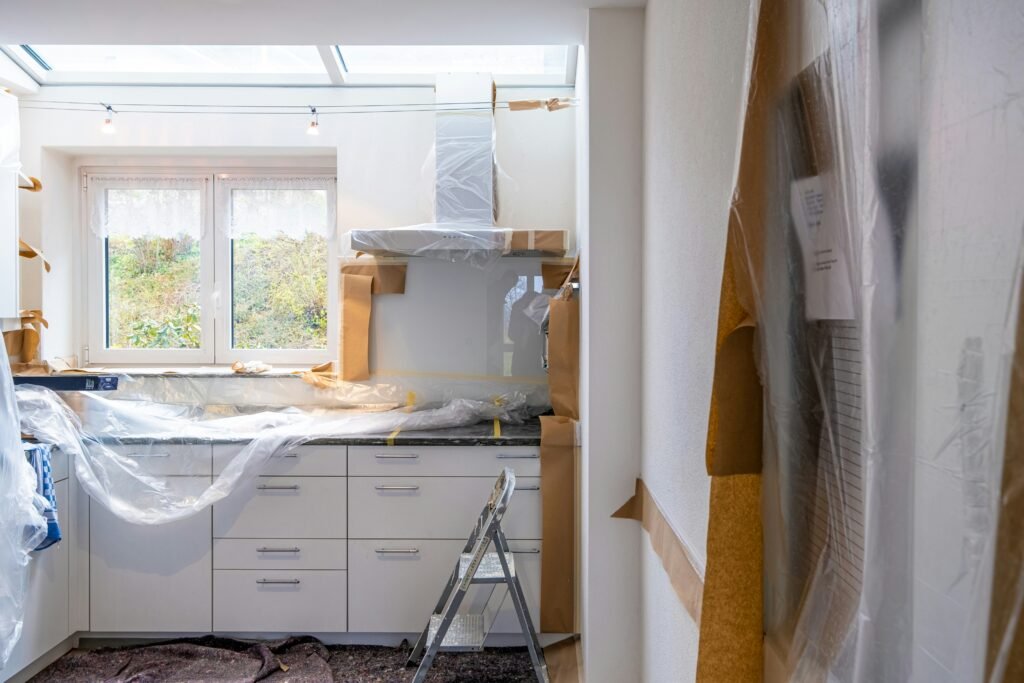
- Temporary plastic barriers
- Sealed doorways and vents
- Exhaust ventilation directed outdoors
- Air filtration equipment
- Adhesive floor protection
- Covered pathways
- Regular debris removal
- HEPA-filtered cleanup equipment
- Separate ventilation arrangements for the work area
The Environmental Protection Agency’s remodeling guidance explains that exhaust ventilation can help remove dust and other pollutants while reducing their movement into occupied areas.
Do not adjust containment barriers or ventilation equipment without consulting the contractor. Opening a barrier for convenience may allow dust to spread through the house.
Replace or inspect HVAC filters as recommended by a qualified professional. Whether the central heating or cooling system should operate during dusty work depends on the project, equipment, containment strategy, and weather conditions.
Consider Lead and Other Hazardous Materials
Older homes may contain materials that require special evaluation before demolition begins. Potential concerns can include lead-based paint, asbestos-containing materials, mold, contaminated dust, or other hazardous substances.
Renovation work that disturbs painted surfaces in a pre-1978 home can create dangerous lead dust. The EPA recommends hiring a properly certified contractor and using lead-safe work practices when applicable. Homeowners can learn more through the agency’s Renovation, Repair and Painting Program.
Do not remain in or re-enter an area undergoing hazardous-material removal unless the qualified professionals managing the work say it is safe. Ordinary dust barriers and household cleaning methods may not be sufficient for specialized remediation.
Discuss testing and safety requirements before demolition rather than after a questionable material has already been disturbed.
Set Up a Temporary Kitchen
Living without a functional kitchen is often one of the most difficult parts of a remodel. A carefully planned temporary kitchen can reduce restaurant and delivery expenses while helping the household maintain a normal routine.
Choose a clean location away from construction dust. Depending on the available electrical capacity and manufacturer instructions, a temporary setup might include:
- A refrigerator or compact refrigerator
- A microwave
- An electric kettle
- A coffee maker
- A toaster or toaster oven
- A slow cooker or multicooker
- Sealed food-storage containers
- Disposable or reusable tableware
- A folding table or shelving unit
- A container for washing and collecting dishes
- Basic cleaning supplies
Do not overload extension cords, power strips, or electrical circuits. Cooking appliances should be used only in suitable locations and according to their safety instructions.
Plan meals around the limitations of the space. Simple foods, prepared ingredients, freezer meals, outdoor grilling where safely permitted, and occasional takeout can make the arrangement more manageable.
If the kitchen sink is unavailable, determine where dishes can be washed without interfering with bathroom hygiene or construction work.
Plan Around Bathroom Interruptions
If bathrooms are being remodeled, confirm which toilet, sink, and shower will remain available at every stage. Do not assume a bathroom will be restored at the end of each working day.
Ask the contractor:
- How long each fixture may be unavailable
- Whether water will be turned off
- How much advance notice you will receive
- Whether one bathroom can be completed before another is started
- What happens if hidden plumbing problems are discovered
- Whether temporary facilities will be necessary
When the house has multiple bathrooms, remodeling them one at a time can help preserve basic functionality. However, the most practical sequence will depend on plumbing connections, permits, inspections, and the overall scope.
Prepare for Utility Shutoffs
Electrical, plumbing, gas, heating, cooling, and internet service may be interrupted during a remodel. Some shutdowns may last only a few minutes, while others can affect an entire working day.
Ask for advance notice whenever possible. Keep phones and essential devices charged, and maintain accessible flashlights rather than relying on candles.
Before a planned water shutdown:
- Fill clean containers with drinking water
- Complete washing and bathing
- Run essential appliances
- Confirm when toilets can be used
- Ask when water service is expected to return
Before an electrical shutdown:
- Charge phones and computers
- Protect sensitive electronics
- Plan alternative work arrangements
- Keep refrigerator and freezer doors closed
- Confirm whether medical equipment will be affected
If anyone in the household relies on powered medical equipment, inform the contractor before construction starts and develop a reliable backup plan with the appropriate professionals.
Protect Children During the Remodel
Construction sites contain sharp objects, unstable materials, exposed openings, electrical hazards, dust, and equipment that may appear interesting to children.
Establish simple rules that children can understand:
- Never enter the construction zone
- Do not touch tools or materials
- Stay away from delivery vehicles
- Do not remove barriers or warning signs
- Ask an adult before approaching workers
- Use only the designated family entrance and pathways
Physical separation is more reliable than verbal instructions alone. Temporary doors, secured barriers, and supervised movement may be necessary.
Talk with the contractor about work that could be especially disruptive or hazardous so children can be away from the house during those periods.
Keep Pets Away From Construction
Remodeling can be stressful and dangerous for pets. Noise, unfamiliar people, open doors, exposed nails, chemicals, and airborne dust can all create problems.
Keep pets in a secure area that workers will not need to enter. Place a visible notice on the door and make sure everyone on the project knows that animals are present.
Consider boarding, pet daycare, or staying with a trusted friend during demolition, floor finishing, painting, or other particularly disruptive stages. Even a normally calm pet may attempt to escape when frightened by construction noise.
Check floors and outdoor areas for fasteners, sharp debris, adhesives, and other hazards before allowing pets to return.
Protect Furniture and Personal Belongings
Remove as much as possible from the construction area before work begins. Contractors need space to work, and ordinary coverings may not fully protect valuable possessions from dust or accidental damage.
Relocate:
- Furniture
- Electronics
- Artwork and mirrors
- Curtains and rugs
- Clothing and linens
- Fragile objects
- Important documents
- Jewelry and valuables
- Medications
- Sentimental possessions
Items stored in nearby rooms should be placed in sealed containers or fully covered. Dust can enter cabinets, closets, and drawers even when they appear closed.
Take photographs of rooms and belongings before construction starts. These records can help you remember where items belong and document the property’s preconstruction condition.
Establish Working Hours and Privacy Boundaries
Living in an active jobsite changes how private areas of the home can be used. Establish working hours and access rules before construction begins.
Confirm:
- When workers may arrive
- When work will usually stop
- Whether weekend work is expected
- Which doors workers may use
- Which rooms are always private
- Whether anyone may enter when you are absent
- How keys or access codes will be managed
- Who will secure the house each evening
- Whether security cameras or alarm systems will be affected
Homeowners should also understand that schedules sometimes change because of deliveries, inspections, weather, or subcontractor availability. The contractor should communicate these changes rather than leaving the household uncertain about who will arrive.
Create a Communication Routine
A consistent communication system can prevent small questions from turning into delays or disputes. Identify one household representative and one contractor representative who can make or relay project decisions.
Agree on how you will communicate about:
- Daily access
- Utility shutdowns
- Deliveries
- Material selections
- Unexpected damage
- Change orders
- Schedule changes
- Safety concerns
- Cleanup problems
- Questions requiring a quick decision
A brief daily or weekly update may be more effective than interrupting workers throughout the day. Keep important decisions in writing, particularly when they affect cost, scope, materials, or completion time.
If you have not yet selected a contractor, review our guide on how to choose a remodeling contractor before requesting and comparing proposals.
Plan for Noise and Working From Home
Construction noise can make phone calls, remote meetings, studying, sleep, and ordinary conversation difficult. Demolition, sawing, drilling, fastening, and material deliveries may create unpredictable interruptions.
Ask which stages are likely to be loudest. If you work from home, consider using a coworking space, library, relative’s home, or another quiet location during those periods.
Noise-canceling headphones may help with moderate background noise, but they should not prevent you from hearing alarms, warnings, or important instructions.
Do not schedule important meetings based solely on the expectation that construction will be quiet. Even a task planned for another day may move forward when materials or subcontractors become available.
Maintain a Daily Cleaning Routine
The contractor should explain what level of jobsite cleanup is included, but homeowners may still need a light routine in occupied areas.
Focus on:
- Keeping family pathways clear
- Removing dust near the living area
- Wiping frequently used surfaces
- Storing food in sealed containers
- Keeping shoes from tracking debris
- Laundering exposed fabrics
- Checking for loose fasteners
- Emptying household trash
- Maintaining functional smoke and carbon monoxide alarms
Avoid sweeping construction dust, which can send fine particles back into the air. Cleanup methods should match the materials being disturbed and any applicable safety procedures.
Do not clean inside an active containment area unless the contractor has confirmed that it is safe and appropriate.
Keep an Emergency Exit Available
Construction materials, equipment, temporary walls, and debris should not prevent the household from leaving the building during an emergency.
Review your normal exit routes and identify alternatives if doors, stairs, hallways, or exterior paths will be affected. Everyone in the household should know how to leave the home without crossing the work area.
Maintain access to smoke alarms, carbon monoxide alarms, fire extinguishers, electrical panels, utility shutoffs, and emergency contact information. Never allow tools or material deliveries to block these locations.
Budget for the Cost of Remaining Home
Staying in the house can avoid hotel or rental expenses, but it is not completely free. Temporary arrangements can create costs that are easy to overlook.
Possible expenses include:
- Additional restaurant and takeout meals
- Temporary kitchen equipment
- Storage containers
- Laundry services
- Pet boarding or daycare
- Coworking space
- House cleaning
- Higher utility use
- Temporary internet arrangements
- Short hotel stays during disruptive work
- Replacing food after an extended power interruption
Include these items in the project budget. Our article on hidden home remodeling costs covers additional expenses that may arise before, during, and after construction.
Know When to Leave Temporarily
Even if you plan to remain home for most of the remodel, be prepared to leave when conditions become unsafe or essential parts of the house become unusable.
Temporary accommodation may be appropriate during:
- Hazardous-material testing or removal
- Extensive demolition
- Major structural work
- Floor sanding or finishing
- Application of products producing strong odors
- Prolonged water, electricity, heating, or cooling interruptions
- Work that eliminates every usable bathroom
- Periods when safe entrances or exits cannot be maintained
- Conditions that cannot be adequately separated from children or pets
Keep a flexible backup plan. Identify a hotel, short-term rental, friend, or relative who could accommodate the household if an unexpected issue makes the home temporarily unsuitable.
Frequently Asked Questions
Can you safely live in a house during a remodel?
It may be possible when the construction area can be securely separated, essential utilities and facilities remain available, and the contractor has an appropriate plan for dust, access, ventilation, and cleanup. The answer depends on the project, property, household, and materials being disturbed.
Is it safe to stay home during demolition?
Limited demolition may be compatible with an occupied house when professional containment and safety measures are in place. Extensive demolition can create substantial dust, noise, debris, and access problems. Ask the contractor whether the household should leave during this stage.
How do you keep remodeling dust out of the rest of the house?
The work area may need sealed barriers, controlled access, appropriate exhaust ventilation, air filtration, covered pathways, and specialized cleanup. The right measures depend on the project and potential contaminants.
Can you use your HVAC system during remodeling?
It depends on the work, containment plan, weather, and HVAC design. Operating the system during dusty construction could distribute particles through the house. Ask the contractor and an appropriate HVAC professional how vents, returns, filters, and equipment should be managed.
How do you cook during a kitchen remodel?
Set up a temporary kitchen in a clean area with refrigeration, food storage, a microwave, and other suitable small appliances. Confirm that the electrical circuits can safely support the equipment and use every appliance according to its instructions.
Should you move out during a bathroom remodel?
You may be able to remain home if another complete bathroom stays functional. Moving out may be necessary if every toilet or bathing facility will be unavailable or if plumbing interruptions become extensive.
How can you protect pets during construction?
Keep pets in a secured room or arrange boarding during disruptive work. Inform workers that animals are present, protect exterior doors, and inspect completed areas for debris before allowing pets to return.
What is the hardest part of living through a remodel?
For many households, the combination of dust, noise, reduced privacy, unavailable rooms, and schedule uncertainty is more difficult than any single inconvenience. Clear expectations and a functional construction-free living zone can make the experience more manageable.
Make the House Livable Before Construction Begins
Learning how to live in your house during a remodel begins with planning for ordinary daily needs. Decide where you will sleep, prepare food, bathe, work, store belongings, and keep children or pets before workers arrive.
Discuss containment, access, utilities, cleanup, security, and communication with the contractor in advance. Also establish a backup accommodation plan in case construction conditions change.
Remaining home will not make a remodel completely comfortable, but thoughtful preparation can help protect your household, reduce daily frustration, and allow the construction team to work more efficiently.
Remodeling Note: This article provides general educational information. Construction hazards, indoor-air concerns, utility requirements, permit rules, and appropriate safety precautions vary by property, project, household, and location. Follow official safety guidance and consult qualified local professionals before remaining in an occupied home during remodeling.