
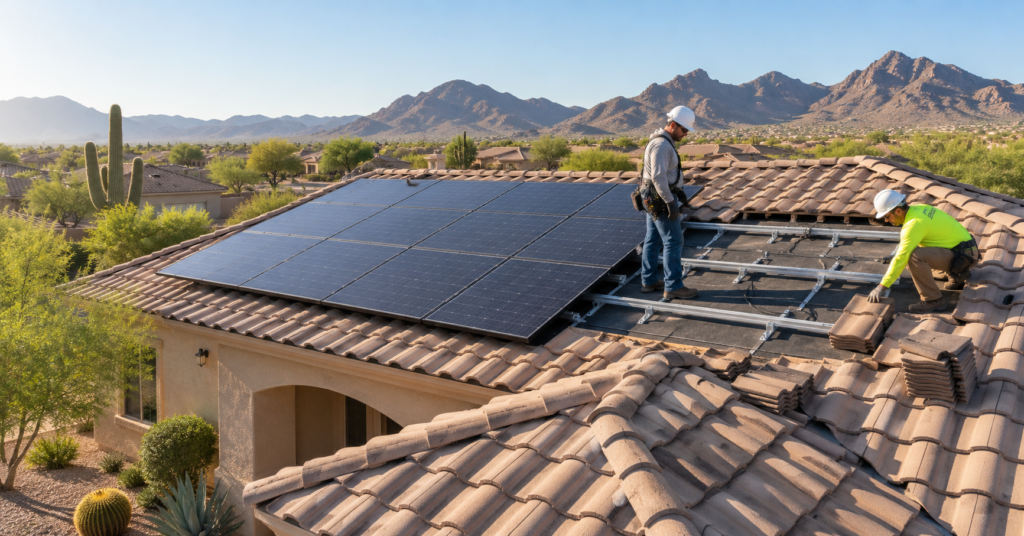
Phoenix Solar Panels can make an otherwise straightforward roof replacement more complicated. The panels must be safely disconnected and removed, the roof needs to be completed without damaging solar components, and the system must then be reinstalled and returned to service.
These responsibilities are not always included in a roofing proposal. Homeowners may discover that the roofer will not touch the solar equipment, while the solar provider will not perform roof repairs. The resulting gap can lead to additional costs, warranty disputes and weeks of unnecessary delay.
Reviewing the roof, solar agreement and contractor responsibilities before scheduling the project can prevent those problems.
Confirm Whether the Roof Actually Needs Full Replacement
A leaking roof does not automatically mean every roofing surface must be replaced. The problem could be limited to broken tiles, deteriorated underlayment, failed flashing or penetrations around the solar mounting system.
An inspection should identify the source of the failure and the condition of roofing beneath the panels. Parts of the roof that receive less direct exposure may age differently, but panel-covered areas can still experience cracked tiles, deteriorated underlayment or water entry around mounting points.
Ask for photographs and written observations of the affected areas. If the inspector cannot access the roof beneath the array, the estimate should explain what can only be confirmed after the panels are removed.
This distinction matters because temporarily removing an entire system for a small repair may be unnecessary. Conversely, repairing only the visible leak may be poor value if the remaining underlayment is approaching the end of its useful life.
Identify Who Owns the Solar System
The first contractual question is whether the panels are owned, financed, leased or covered by a power purchase agreement. Ownership determines who can authorize removal and who may be permitted to work on the equipment.
With an owned system, the homeowner may have more flexibility when selecting a qualified contractor. A financed system may still be owned by the homeowner, but the financing and warranty documents should be checked for restrictions.
Leased systems and power purchase agreements can be more restrictive. The solar company may retain ownership of the equipment and require its own technicians or approved contractors to remove and reinstall it. Beginning work without authorization could create a contract or warranty dispute.
Locate the original solar agreement before accepting the roofing proposal. Review the sections addressing roof repairs, temporary removal, labour charges, notice requirements and responsibility for damage. If the original solar company is no longer operating, determine who currently administers the agreement and equipment warranty.
Price Removal and Reinstallation Separately
A roof replacement quote may exclude solar panel removal even when the panels cover much of the work area. “Solar by others” means the homeowner must arrange and pay for that work separately.
Removal and reinstallation costs vary according to the number of panels, roof height, mounting system, wiring configuration, access and storage requirements. Homeowners may encounter estimates calculated per panel or as one price for the complete array.
A basic budgeting range may fall between approximately $100 and $300 per panel for removal and reinstallation, while complicated systems can cost more. A complete residential array could therefore add several thousand dollars to the roofing project. These are general planning figures, not fixed Phoenix prices.
The written solar scope should clarify whether the price includes:
- System shutdown and electrical disconnection
- Removal of panels, rails and affected mounting hardware
- Safe handling and temporary storage
- Inspection of removed equipment
- Replacement mounting components
- Reinstallation and reconnection
- Testing and confirmation that the system is operating
- Permit or inspection work when required
A low removal quote may cover only taking panels off the roof. Reinstallation, replacement hardware and recommissioning could be billed separately.
Inspect Phoenix Solar Panels After Removal
Once panels are off the roof, the project creates an opportunity to inspect components that are normally difficult to access. The contractor should document cracked panels, damaged connectors, deteriorated wiring, loose rails and corroded hardware before the equipment is stored.
This protects both the homeowner and the contractors. Without a condition record, it may be difficult to determine whether a damaged panel was already defective or was harmed during removal, storage or reinstallation.
The roof should also be photographed after the mounting system is removed. Old penetrations, patching, water staining and broken tiles may reveal conditions that were not visible during the initial inspection.
If the system is older, replacement parts may not be readily interchangeable with the original hardware. Confirm availability before removing the system so an obsolete bracket or damaged connector does not keep the array off the roof for an extended period.
Decide How the Panels Will Be Stored
Panels should not be casually stacked in a yard or leaned against the house. They can be damaged by impact, wind, moisture, construction debris or improper handling.
The contract should identify who controls the equipment after removal and where it will be stored. Some contractors transport panels to a secure facility. Others expect them to remain on the property.
On-site storage requires enough protected space that will not interfere with roofing deliveries or debris removal. The storage location should also reduce the risk of theft and accidental damage.
Responsibility should remain clear during this period. If one company removes the panels and another stores them, the agreements need to establish when responsibility transfers between parties.
Account for Tile Roof Damage
Tile roofs are common in Phoenix, and accessing a solar array can result in broken tiles. Existing tiles may also crack when rails and mounting hardware are removed.
Confirm whether replacement tiles are included and whether matching products are available. Colour differences can be noticeable when new tiles are installed among weathered ones. In some cases, tiles can be relocated from a less visible roof section to improve the appearance of the primary elevation.
The roofer and solar contractor should agree on how workers will access completed surfaces during reinstallation. A new roof can be damaged almost immediately if the panel crew walks on fragile tiles without an appropriate access plan.
Before installation, verify that the replacement tiles and mounting products match the approved specifications. TCR’s guide on verifying remodeling materials explains how to confirm product numbers, quantities, finishes and condition before materials are used.
Resolve the New Mounting Plan Before Roofing Begins
Old mounting points should not automatically be reused. The new roofing assembly, panel layout and hardware specifications may require different locations or flashing details.
Determine whether the roof will be completed before the new mounts are installed or whether certain components must be coordinated during roofing. Either approach requires clear responsibility for sealing penetrations.
If the solar system is being reconfigured, the project may need revised plans. Moving panels to a different roof plane, changing the array size or replacing major equipment is different from reinstalling the same system in substantially the same arrangement.
The roofer should understand where the mounts will be placed, while the solar contractor should understand the new roofing material and flashing requirements. Leaving this discussion until the panels return can result in drilling through finished work without an agreed detail.
Review Both Roof and Solar Warranties
Roofing and solar warranties can overlap at the mounting points. A roof warranty may exclude leaks caused by another contractor’s penetrations, while a solar warranty may exclude damage caused during removal by an unauthorized party.
Ask each contractor to identify its responsibility in writing. The homeowner should know who will investigate if a leak appears near a mount after the project is finished.
Important distinctions include warranties for:
- The roofing material
- Roofing installation
- Flashing and mounting penetrations
- Solar equipment
- Panel removal and reinstallation labour
- Damage caused during storage or handling
A verbal statement that “the warranty will be fine” is not enough. The relevant contract language should support that assurance.
Arizona requires appropriate contractor qualifications for solar-device installation, alteration and repair. Homeowners can use the Arizona Registrar of Contractors to check licence information and review state contractor resources before work begins.
Determine Whether Permit Updates Are Required
Removing panels temporarily does not always require the same review as installing a new system, but the scope can change that conclusion. Altering the array, replacing electrical components or modifying the mounting layout may trigger permit or inspection requirements.
The City of Phoenix accepts residential photovoltaic applications and provides information for eligible projects through its SolarAPP and photovoltaic permitting page. The contractor should confirm which approvals apply to the proposed work rather than relying on the original solar permit.
Keep copies of the approved plans and existing permit record. Those documents can help establish the system’s original configuration and make it easier to identify proposed changes.
If the home is outside Phoenix city limits despite having a Phoenix mailing address, confirm which jurisdiction controls the project.
Coordinate the Roofing and Solar Schedules
The roof cannot usually begin until the required panels and mounting components have been removed. Reinstallation cannot happen until the roofing work is complete and the surface is ready to receive the system.
A workable schedule should include more than the roofer’s construction dates. It should account for shutdown, removal, roofing inspection, cure times when applicable, delivery of replacement hardware, reinstallation and system testing.
Weather and material delays can make a tightly arranged schedule unrealistic. If the roofing work takes longer than expected, confirm whether the solar contractor charges for rescheduling or extended storage.
The system will not produce electricity while disconnected. Homeowners should plan for a temporary change in utility usage, particularly during high-cooling months.
When different contractors are involved, one person should be responsible for confirming that each stage is ready. TCR’s article on remodel trades that are not coordinating explains how written responsibilities and shared project information can reduce conflicts between specialized crews.
Document Energy Production Before Shutdown
Review recent production data before the panels are disconnected. Record normal output and save screenshots or reports from the monitoring system.
This creates a baseline for evaluating the system after reinstallation. If production drops substantially, the records can help distinguish a new problem from an earlier performance issue.
After reconnection, confirm that the monitoring system recognizes all panels or components it tracked before the work. Do not assume that visible power generation proves the entire array is functioning correctly.
The final project documents should include testing results, photographs, updated equipment information and any revised permit or warranty records.
Consider Roof Replacement Before Installing New Panels
Homeowners who have not yet installed solar panels should compare the expected life of the roof with the anticipated service period of the solar system. Installing panels over a roof likely to need replacement soon can create an avoidable removal-and-reinstallation expense.
This does not mean every older roof must be replaced before solar installation. Its actual condition matters more than age alone. An inspection can help determine whether repairs, partial replacement or full replacement is appropriate.
If both projects are likely, coordinating them can reduce duplicated labour and allow mounting details to be planned as part of the new roof. It also avoids disturbing a recently installed solar array to address a foreseeable roofing problem.
Build One Complete Project Budget
The roof proposal is only one part of the total cost. A realistic budget should combine roofing work, solar removal, storage, replacement hardware, reinstallation, testing, permits and repairs to concealed damage.
Include an allowance for broken tiles or deteriorated decking discovered after the array is removed. These items should not be treated as guaranteed expenses, but ignoring them can leave the homeowner without enough contingency when work is underway.
Before signing, compare the documents from both contractors side by side. Every stage should have a responsible party, a price or pricing method, and a clear description of what constitutes completion.
Remodeling Note: Solar, roofing and permit requirements vary according to the property, system and project scope. Confirm current requirements with the appropriate Phoenix authority and qualified contractors before authorizing removal or roof work.